
Exposed Aggregate Colours: Choosing Your Finish in Melbourne
October 24, 2026 · 3 min read
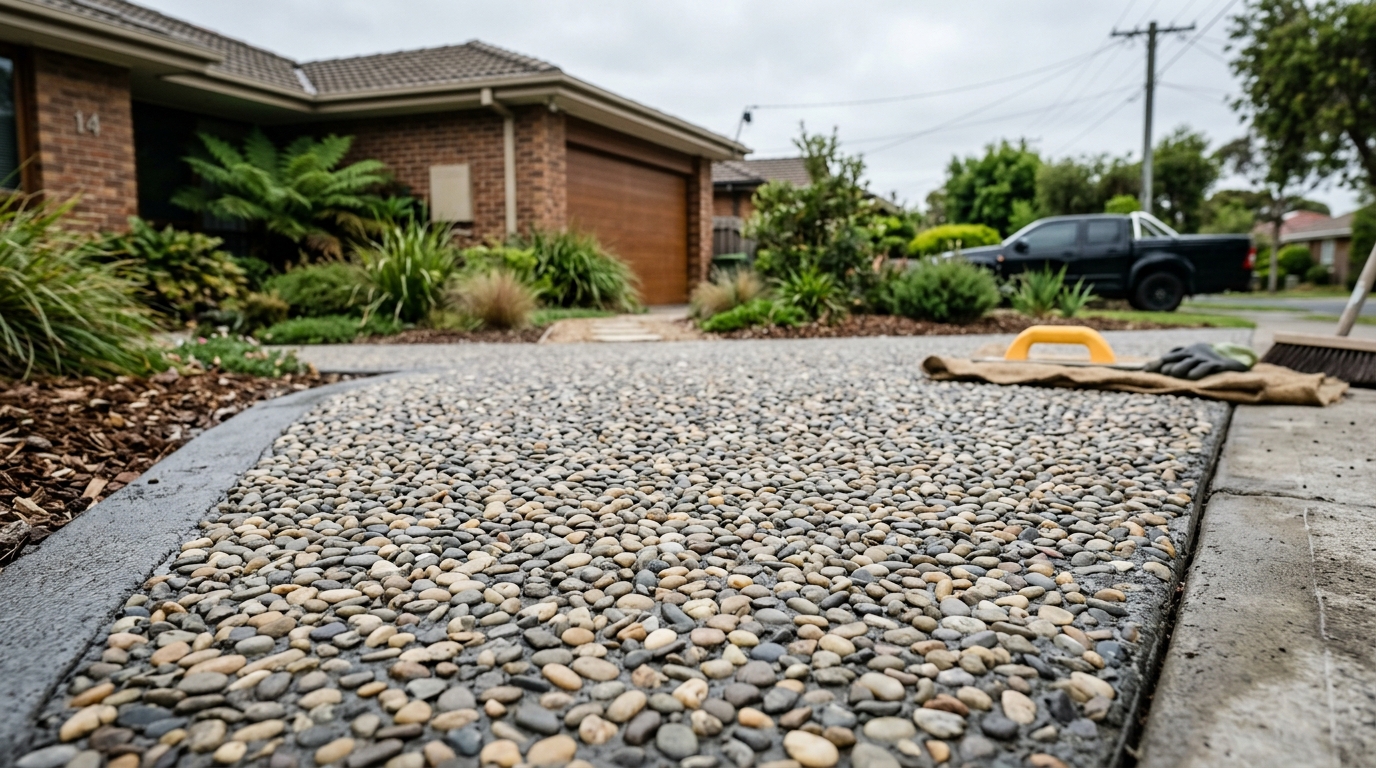
The most popular choices are light neutrals, charcoal, sandy beige and earthy brown. Each one changes how hot, bright and forgiving your surface looks and feels. Here is how we help you choose.
Exposed Aggregate Colours: A Practical Guide to Choosing the Right Finish
Start with where the surface sits and how you use it. Aggregate colour significantly influences design style and the mood of a space, so the right choice can dramatically change how your outdoor area looks. A good colour choice will enhance your property's aesthetics for the life of the slab.
Understanding Exposed Aggregate Concrete
We create this finish by removing the thin cement layer from the surface so the small stones underneath show through. The result is a durable, textured surface with a decorative finish. The stones are natural quarry products, so tone and size vary between supplies.
Slip Resistant Exposed Concrete for Outdoor Areas
The textured surface is slip resistant, which makes it suitable for pool surrounds, paths, patios and driveways. Slip resistance depends on stone size and how deep we expose it. It is a strong choice for outdoor applications that get wet.
How Aggregate Colours Change the Finished Product
Stone colour and cement colour together alter light reflection and the architectural harmony of your space. The contrast between stones and cement sets the overall character. High contrast gives a bold, graphic pattern that makes the stones pop. Monochromatic combinations create a softer, more unified appearance.
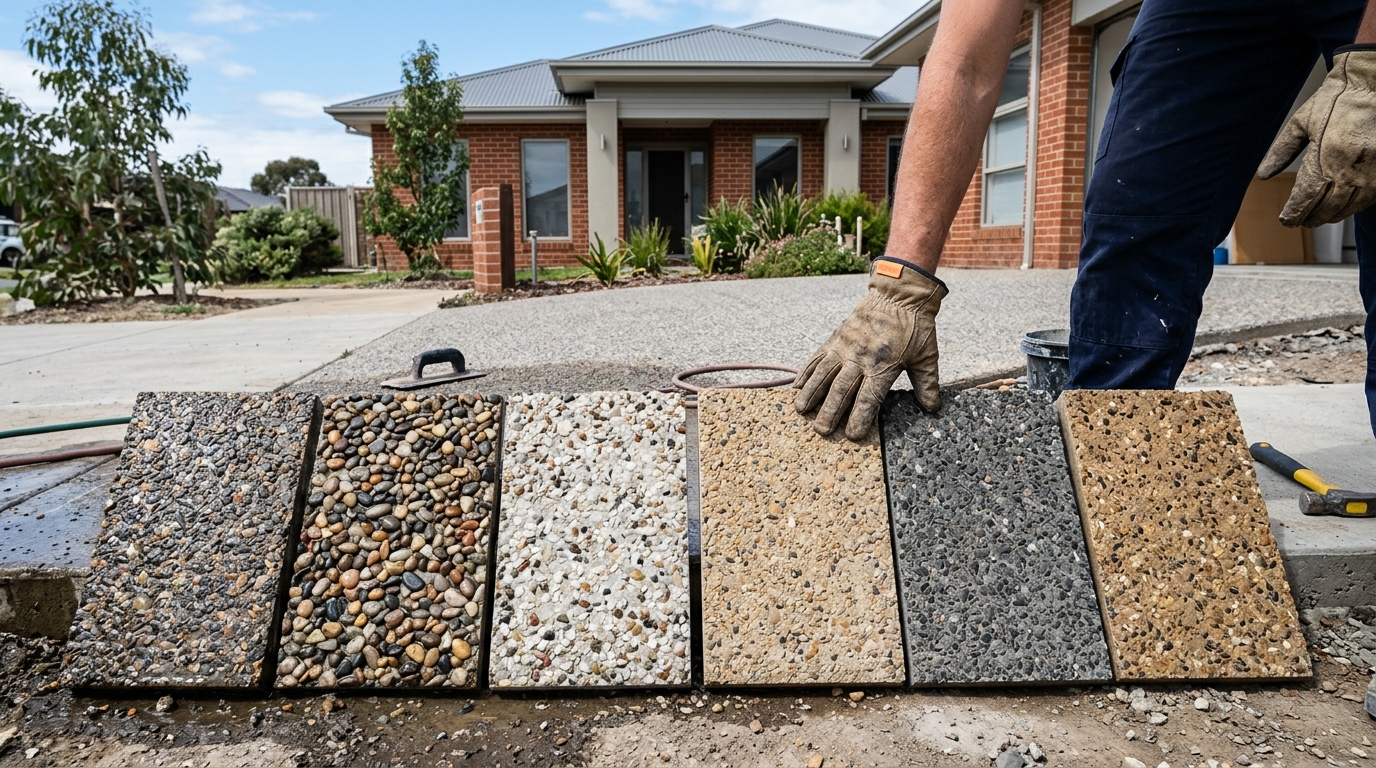
Exposed Aggregate Colour Families
Four families cover most projects:
Light tones, from white and cream to pale grey
Charcoal and dark grey
Sandy beige and taupe
Earthy brown and terracotta
Vibrant and specialty stones add unexpected artistic flair. Suppliers offer a wide selection, and coloured sealers give added design flexibility.
Choosing the Right Concrete Mix
Your concrete mix sets the cement tone, the sand and the stone size. Mixes that include slag can lower embodied carbon, which matters if you are working towards a Green Star rating.
Light Aggregate Colours
Light tones create a bright, clean feel and reflect more sunlight than dark mixes. They brighten shadowed areas and expand the visual space of a small courtyard. Light aggregate generally stays cooler in direct sun, but it shows stains more easily.
Dark Aggregate Concrete
Charcoal and dark grey give a modern look and absorb more heat. Dark aggregate can become hotter underfoot in full sun, so think carefully before using it around a pool. Dark colours also help establish visual boundaries and emphasise architectural lines.
Warm Coloured Concrete Tones
Sandy beige and earthy browns blend into natural settings and hide dirt better than light shades. Terracotta evokes Mediterranean charm and draws the eye to outdoor areas. Warm tones pair well with brick, timber and planting.
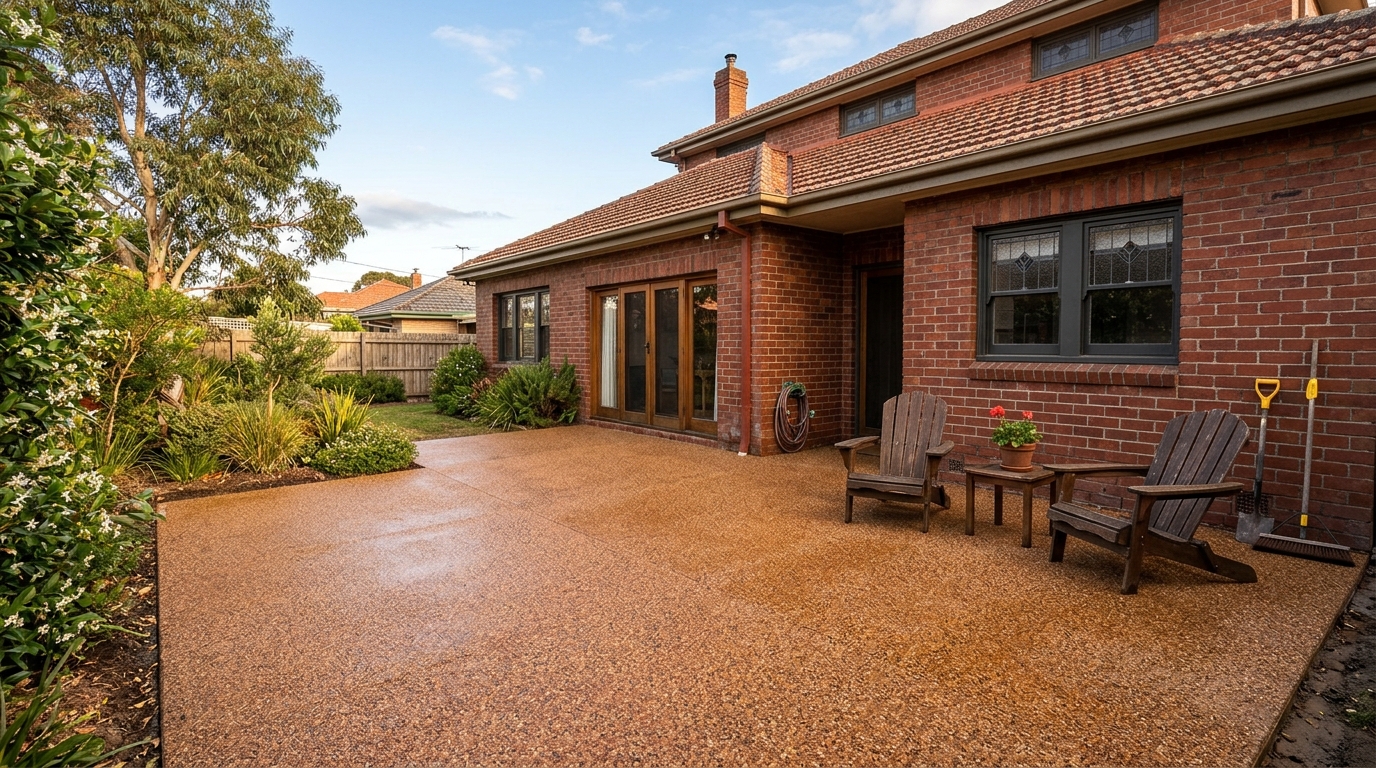
Matching Decorative Concrete to Your Home
Take your cue from the roof, brick, tiles and pavers already on site. Pick a tone that complements these other materials rather than competing with them. This gives you visual appeal that lasts.
Mixed Aggregate Blends
Blends combine several stones in one surface, which adds depth and a natural look. They handle weathering and everyday wear well. A blend also makes it easier to tie together a home with several materials.
Exposed Aggregate Versus Polished Concrete
Polished concrete is ground smooth and suits interiors. Exposed aggregate keeps its texture, so it is the better fit for exterior surfaces that need grip.
Exposed Aggregate Versus Coloured Concrete
Coloured concrete relies on pigment in the mix. With aggregate, the colour comes from natural stones, which hold up well to weathering.
Evaluating Samples Before Your Next Project
Any photo or printed chart is not an exact representation of the finished slab. Look at an actual sample outdoors, in sun and shade, wet and dry, before you make your final colour selections.
What Are the Downsides?
The textured surface takes more effort to clean than a smooth one.
Light colours show stains sooner.
The surface needs resealing from time to time.
Dark colours run hot in summer sun.
Talk to Us About Your Project
We pour and finish exposed aggregate for driveways, paths, patios and pool surrounds across Melbourne. Tell us how you use the space, and we will help you narrow down the colour. Call concreters melbourne pros on 466 045 564 to discuss your project.